Tony Buzan's Claims
Tony Buzan popularized mind mapping in the 1990s with claims that it could revolutionize thinking, memory, and creativity. His central assertions included: mind maps replicate natural brain functioning (radiating from a central concept); they enable 100% retention of information; they activate both left and right brain processing; and they produce exponential improvements in productivity and creativity.
These claims exceeded what any scientific evidence had established, and many remain unsubstantiated. Buzan founded the Mind Mapping organization and trademarked certain visual elements of mind mapping, combining commercial interests with the educational technique in ways that complicated independent evaluation.
Research Evidence
Research on mind mapping effectiveness has produced mixed results, with evidence weaker than Buzan's claims suggest but more positive than complete absence of effect:
Farrand and colleagues (2002) conducted one of the most frequently cited studies, examining whether mind mapping improved recall of written material compared to note-taking. The study found that mind mapping produced a 10% improvement in recall compared to note-taking after one week. However, this modest improvement must be interpreted carefully: the mind mapping group also spent more time on the task, and the control condition (linear note-taking) may not have been optimally implemented.
Other studies have found larger effects when mind mapping is compared to unstructured reading or no intervention, but smaller or absent effects when compared to other active learning strategies. The research suggests that mind mapping's benefits may derive primarily from the engagement it requires rather than its specific visual format.
Farrand et al. Study (2002)
The Farrand, Hussain, and Hennessy study specifically examined mind mapping versus linear note-taking for recall of medical textbook content. Key findings:
The mind map group showed statistically significant improvement in delayed recall (after 1 week) compared to the note-taking group. However, the effect size was modest (approximately 10% improvement), and the mind mapping group spent significantly longer on the encoding task (averaging 22 minutes versus 12 minutes for notes).
The study's limitations have been noted: the note-taking condition instructed participants to take linear notes without further guidance, which may have disadvantaged that condition. Optimal note-taking strategies (organization, elaboration, self-testing) weren't controlled for.
The Encoding Advantage Debate
The debate about mind mapping centers on encoding versus retrieval. The encoding hypothesis proposes that mind maps create richer memory traces because they require elaborative processing—the act of organizing relationships between concepts produces better encoding than linear recording. The retrieval hypothesis proposes that mind maps create better retrieval cues because the spatial layout provides multiple access routes to the same information.
Evidence supports both mechanisms partially. The elaborative processing required to organize information spatially does seem to produce richer encoding compared to linear recording. However, the specific benefit over other elaborative strategies (concept mapping, self-explanation, practice testing) remains unclear.
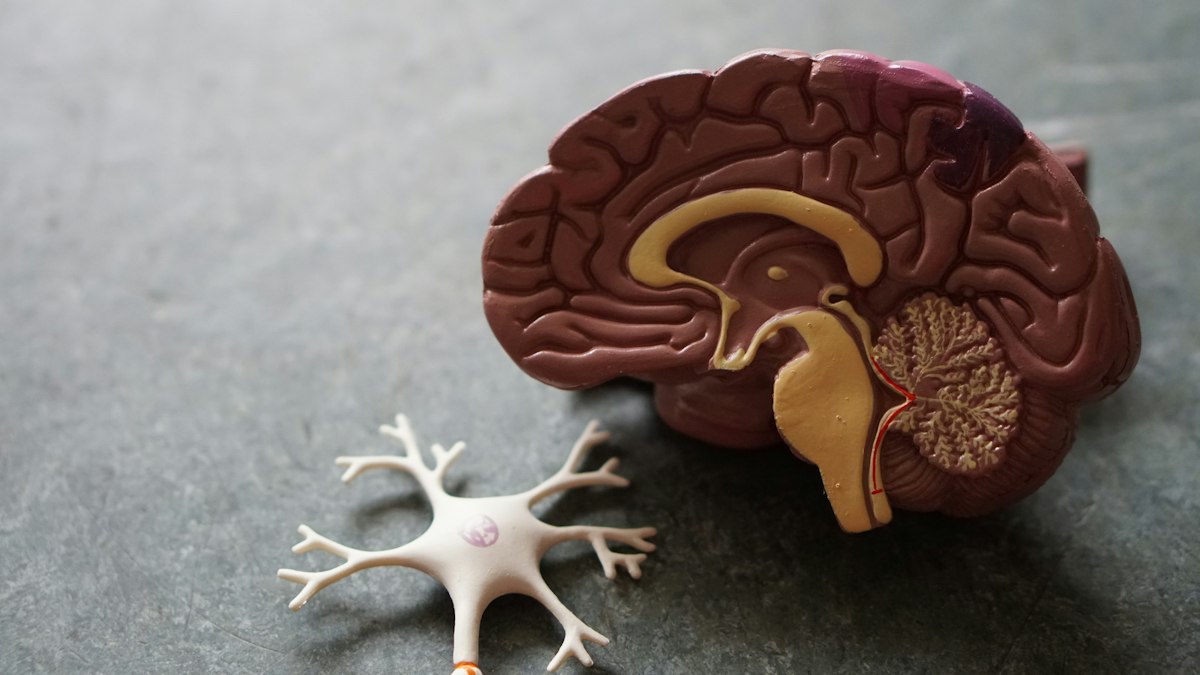
Critics note that the brain doesn't actually function like a radial mind map—no evidence shows that information stored in the brain takes this format. The spatial metaphor may be a useful organizational tool without reflecting actual neural organization.
When Mind Mapping Actually Works
Mind mapping appears most effective when:
Structuring complex information: When material has multiple relationships between concepts, the spatial organization helps reveal structure that linear formats obscure.
Generating overviews: Mind maps are excellent for previewing or reviewing material, providing gestalt-level understanding before diving into details.
Collaborative planning: Group mind mapping sessions can reveal different perspectives and generate shared understanding.
Mind mapping appears less clearly beneficial when:
Simple material: For straightforward information with few relationships, the overhead of creating a mind map may exceed the benefit.
Deep learning: When the goal is deep conceptual understanding rather than retention of relationships, other strategies (elaborative interrogation, practice testing) have stronger evidence.
Practical Guidance
Don't accept Buzan's overclaims: Mind mapping is a useful organizational tool, not a miracle memory technique. Expect modest benefits over passive reading, comparable benefits to other active strategies.
Use it for structuring, not just recording: Mind maps created from memory (after studying) likely produce more benefit than copying existing information into map format.
Consider alternatives: Concept maps (more formal semantic relationships), self-explanation, and practice testing all have stronger evidence bases for learning than mind mapping.
Match tool to task: Mind maps are excellent for brainstorming and overview generation; they may be less optimal for detailed analytical work where linear precision matters.