Current headset specs, pancake lenses, eye tracking, and adoption barriers
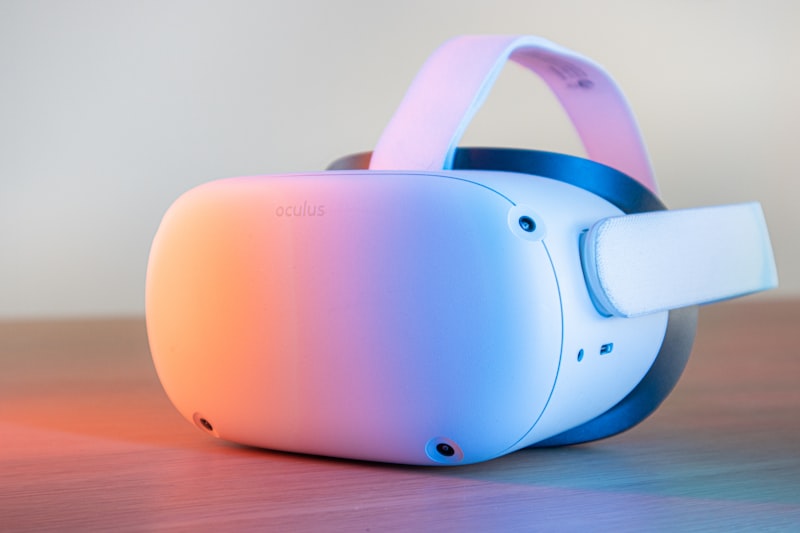
Virtual reality has been "almost ready for mainstream" for decades. But in 2024-2025, something shifted. The Vision Pro demonstrated that spatial computing could deliver genuinely magical experiences. The Quest 3 proved standalone VR could be both capable and affordable. Mixed reality blur the line between virtual and real in ways that feel transformative.
This article examines the current state of VR technology: current headsets, the optics innovations enabling smaller devices, eye tracking and mixed reality, and why VR still hasn't reached mass adoption.
The Quest 3 (released October 2023) represents the current mainstream VR standard:
| Specification | Meta Quest 3 |
|---|---|
| Display | LCD, 2064×2208 per eye, 90Hz/120Hz |
| Processor | Snapdragon XR2 Gen 2 |
| Storage | 128GB / 512GB |
| RAM | 8GB |
| Tracking | Inside-out, 6DoF |
| Passthrough | Full-color mixed reality |
| Battery | ~2 hours (built-in) |
| Price | $499 (128GB) / $649 (512GB) |
The Quest 3's key advancement is pancake lenses replacing Fresnel lenses, enabling significantly thinner optics while improving visual clarity.
Apple's Vision Pro (released February 2024) represents the high end of spatial computing:
| Specification | Apple Vision Pro |
|---|---|
| Display | Micro-OLED, 23MP total, 90Hz |
| Processor | M2 + R1 (dedicated for sensors) |
| Storage | 256GB / 512GB / 1TB |
| RAM | 16GB unified |
| Tracking | Inside-out, eye tracking, hand tracking |
| Passthrough | High-quality mixed reality |
| Battery | External (2 hours) |
| Price | $3,499 |
The Vision Pro's Micro-OLED displays offer vastly superior image quality compared to LCD, with HDR support and much higher pixel density. Eye tracking enables intuitive interaction and foveated rendering.
Pancake lenses represent the biggest optical advancement in recent VR:
Fresnel lenses (Quest 2):
  - Concentric grooves focus light
  - Compact but suffer from god rays, reduced contrast
  - Moderate Sweet spot

Pancake lenses (Quest 3, Vision Pro):
  - Multiple reflective surfaces fold light path
  - Much thinner form factor
  - Better contrast, less aberration
  - Smaller sweet spot (requires precise IPD adjustment)
The "pancake" design folds the optical path multiple times, reducing the distance between lens and display from ~45mm (Fresnel) to ~25mm. This directly enables thinner headsets.
| Technology | Pros | Cons | Used In |
|---|---|---|---|
| LCD | Cheap, fast refresh | Lower contrast, light bleed | Quest 3, most mainstream |
| OLED | Perfect blacks, HDR | Potential burn-in, Pentile pattern | PSVR2, Quest Pro |
| Micro-OLED | High pixel density, HDR, thin | Expensive, smaller panels | Vision Pro |
Eye tracking enables rendering only where you're looking sharply, saving GPU resources:
Traditional rendering:
  Full resolution across entire display
  ~8-10 MP rendered at full quality

Foveated rendering:
  High resolution only in gaze direction (fovea)
  Peripheral vision rendered at lower resolution
  Requires accurate, low-latency eye tracking

Benefits: 2-4x reduction in pixels rendered
The Vision Pro uses this extensively to deliver high apparent resolution despite needing to render two high-resolution displays. As eye tracking improves, foveated rendering will become standard.
Modern headsets blend virtual content with real-world cameras, enabling mixed reality:
Eye tracking enables potentially concerning applications:
These capabilities raise privacy questions that the industry is still grappling with.
Gaming remains VR's primary use case:
Enterprise adoption is actually ahead of consumer:
Apple's spatial content ecosystem:
The ultimate goal is lightweight, all-day wearable glasses that seamlessly blend digital and physical worlds. We're probably 5-10 years from consumer-ready true AR glasses, but the path is being carved by VR headsets.
VR technology has improved dramatically. Displays are sharper, optics are smaller, mixed reality works, and content libraries are growing. The Vision Pro demonstrated what's possible when cost isn't a constraint; the Quest 3 proves viable technology at accessible prices.
The remaining barriers are significant but not fundamental: better optics will reduce size, improved batteries will extend life, and content will mature as the user base grows. The question isn't whether VR will become mainstream—it's when and at what price point.
For enterprise applications, VR is already proving valuable. For consumers, another 2-5 years of incremental improvement likely precedes any mass adoption breakthrough.